
categories
HOT TOPICS
- The Accelerator Conundrum
- The Startup Velocity Question
- Man and Superman
- Web 3.0 = (4C + P + VS)
- The Future: End of Capitalism
- Capitalism 2.0

Bootstrapping Course: Welcome
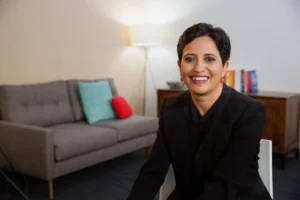
1Mby1M Founder Sramana Mitra wants entrepreneurs to not waste their time and money.
The waste stems from a widespread misunderstanding of how investors think.
Over 99% of founders chase funding before they are fundable.
Here, Sramana teaches how to build with customer money (otherwise known as revenue) until a startup reaches that fundable stage.
Once fundable, a startup can go to investors like a king, not a beggar.
Featured Videos
The Startup Velocity Question: What Hinders Acceleration in VC Funded Companies?

I have been running 1Mby1M since 2010. I find myself saying to entrepreneurs ad nauseam that VCs want to invest in startups that can go from zero to $100 million in revenue in 5 to 7 years.
Startups that do not have what it takes to achieve velocity should not be venture funded.
Experienced VCs, over time, have developed heuristics to gauge what constitutes a high growth venture investment thesis.
>>>The Accelerator Conundrum: Navigating Your Path to Startup Success

The Accelerator Conundrum is a multipart series that challenges the prevailing wisdom of the tech startup ecosystem that entrepreneurs should Blitzscale out of the gate. Written by Sramana Mitra, the Founder and CEO of One Million by One Million (1Mby1M), the world’s first global virtual accelerator, it emphatically argues that a better strategy is to Bootstrap First, Raise Money Later, focus on customers, revenues and profits. 1Mby1M’s mission is to help a Million entrepreneurs reach a million dollars in annual revenue and beyond. Sramana’s Digital Mind AI Mentor virtually mentors entrepreneurs around the world in 57 languages. Try it out!
Alright, let’s cut through the noise and get to the brutal truth of the startup accelerator world. Many entrepreneurs, starry-eyed and naive, leap headfirst into 3-month accelerator programs without truly understanding the long-term implications. It’s time for an incisive commentary, a necessary dissection.
>>>October 29 – 747th 1Mby1M Mentoring Roundtable for Entrepreneurs
Entrepreneurs are invited to the 747th FREE online 1Mby1M Mentoring Roundtable on Thursday, October 29, 2026, at 8 a.m. PDT / 11 a.m. EDT / 5 p.m. CEST / 8:30 p.m. India IST.
If you are a serious entrepreneur, register to Pitch and sell your business idea. You’ll receive straightforward feedback from Sramana Mitra, advice on next steps, and answers to any of your questions. Others can register to Attend to watch and learn.
You can learn more here and REGISTER TO PITCH OR ATTEND HERE. Please share with any entrepreneurs in your circle who may be Interested.
Featured Videos
746th 1Mby1M Mentoring Roundtable Recording
In case you missed it, you can listen here:

Roundtable Recap: October 22 – Why $1.5M in Revenue and Profitability Still Won’t Get You VC Money
At last week’s 1Mby1M Mentoring Roundtable, I coached an entrepreneur who reached a fantastic milestone: $1.5M in revenue, approaching profitability, built over five years with friends and family funding.
He came to the roundtable wanting to raise venture capital. He showed me a portfolio of 250 products, though, predictably, a handful generated almost all the revenue.
His achievement is commendable. Building a cash-flowing, multi-product business on lean capital is real entrepreneurship. However, my advice to him was a stark reality check. In his current structure, no institutional VC will touch this company.
>>>Video FAQs
Can 1M/1M Help Me Raise Money?
How Does 1M/1M Democratize Entrepreneurship Education?
How Does 1M/1M Democratize Management Consulting?
When Is The Right Time To Join 1M/1M?
Can 1M/1M Help Me With Business Development?
Can 1M/1M Help Me With Market Sizing?
Can 1M/1M Help Me Validate My Product?
Will I Have Private 1-on-1 Sessions In 1M/1M?
How Does 1M/1M Help Entrepreneurs Connect With Silicon Valley?
Mentoring or Consulting?
Why Does 1M/1M Charge $1000 a Year?
Why Does 1M/1M Partner With Local Organizations?
Why Don\’t Mentoring Networks Work?
Why Is It Important To Study With 1M/1M Now?
Dan Stewart Story
Vikrant Mathur Story
Analysis of Adobe’s Topaz Labs Acquisition
Adobe’s (NASDAQ: ADBE) stock has had a tough run this year as the market continues to worry about how Adobe competes with AI’s growing capabilities. The company is addressing the concern through acquisitions and product development. Its recent quarterly results remain impressive but have failed to drive the stock value upwards.
>>>October 22 – 746th 1Mby1M Mentoring Roundtable for Entrepreneurs
Entrepreneurs are invited to the 746th FREE online 1Mby1M Mentoring Roundtable on Thursday, October 22, 2026, at 8 a.m. PDT / 11 a.m. EDT / 5 p.m. CEST / 8:30 p.m. India IST.
If you are a serious entrepreneur, register to Pitch and sell your business idea. You’ll receive straightforward feedback from Sramana Mitra, advice on next steps, and answers to any of your questions. Others can register to Attend to watch and learn.
You can learn more here and REGISTER TO PITCH OR ATTEND HERE. Please share with any entrepreneurs in your circle who may be Interested.
745th 1Mby1M Mentoring Roundtable Recording
In case you missed it, you can listen to the recording here:

Roundtable Recap: October 15 – D2C Freemium at Pre-seed is a Recipe for Instant Rejection
Adopting a Direct-to-Consumer (D2C) freemium model at the pre-seed stage is a recipe for instant rejection by institutional investors. Freemium conversion rates are notoriously abysmal, typically hovering around 1% to 3%, meaning you need a massive, hyper-engaged user base just to generate negligible revenue. Unless you can demonstrate explosive, virally acquired user growth coupled with a proven, frictionless path to monetization, no venture capitalist will touch it. Pre-seed investors are looking for clear signals of customer demand and willingness to pay, not a bloated base of free users that drains server costs while offering zero financial return.
ServiceNow’s AI Focused Cybersecurity Growth
For the last reported second quarter, ServiceNow (NYSE:NOW) surpassed market expectations. Its outlook, however, failed to impress the market. The company continues to accelerate on its AI offerings as it looks to expand beyond traditional workflow solutions to establishing itself within the cybersecurity market.
>>>